
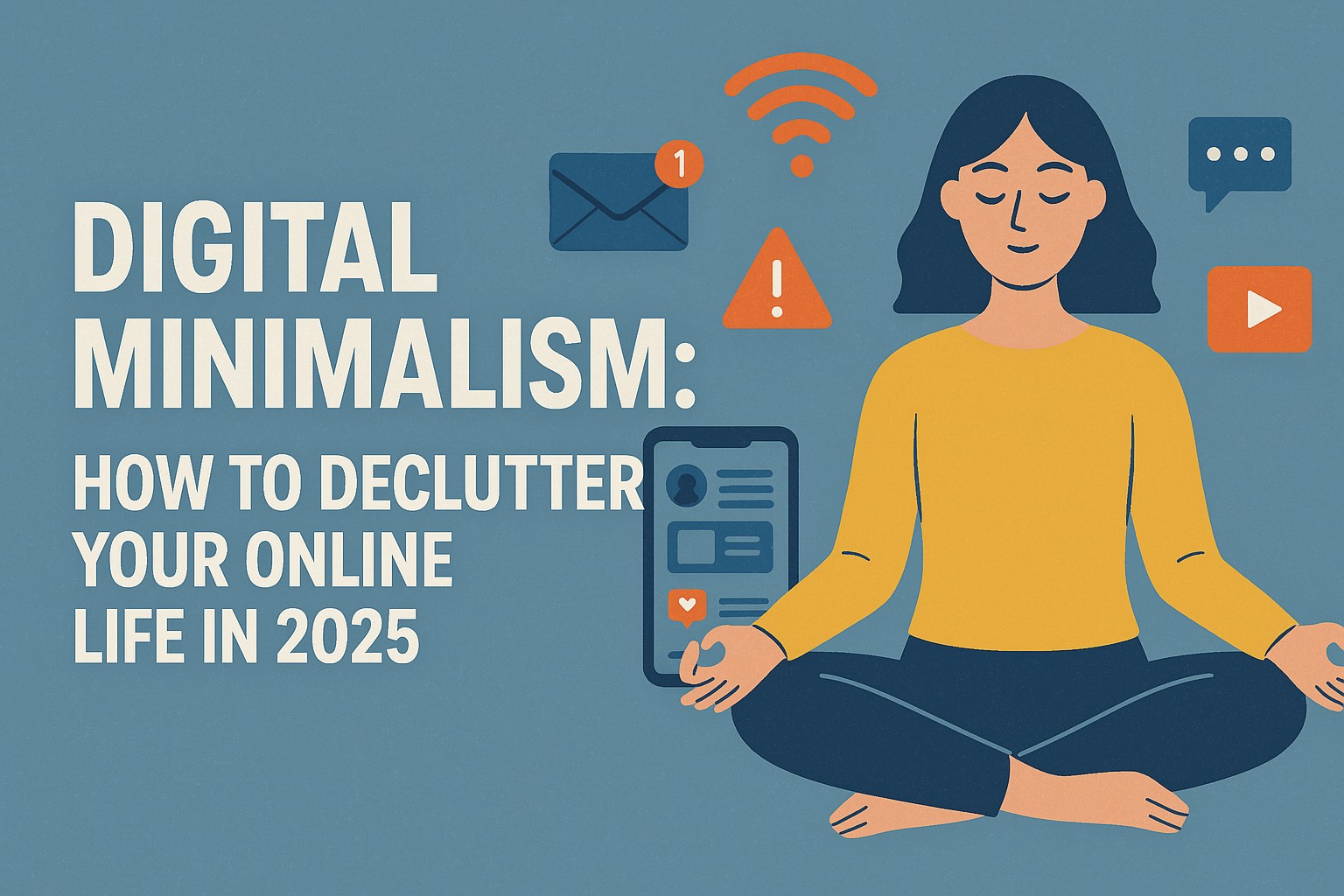
In an age where we’re constantly connected, digital overload has become one of the most significant threats to our mental well-being. Notifications, emails, social media updates, streaming content, and endless information feeds are just a swipe away. The average person spends over 7 hours a day looking at screens, often unconsciously scrolling through content that adds no real value to their lives. As we step further into 2025, it’s time to ask ourselves: are we in control of our digital lives, or are they controlling us?
Welcome to the age of Digital Minimalism.
This blog post will guide you through actionable steps to declutter your online life and reclaim your focus, productivity, and peace of mind. You’ll learn how to manage digital overload effectively, embrace minimalism in your tech habits, and improve your overall mental health in the process.
What is Digital Minimalism?
Digital Minimalism is a philosophy that encourages you to be intentional about the technology you use. It’s not about abandoning technology altogether, but rather about using it in a way that aligns with your values and enhances your life.
Popularized by Cal Newport in his groundbreaking book Digital Minimalism, this lifestyle shift helps you strip away digital clutter and focus only on what truly matters. In 2025, this concept is more relevant than ever. With the rise of AI, immersive media, and hyper-connected devices, it’s essential to find balance.
Why Digital Minimalism Matters in 2025
Technology has evolved dramatically, offering unprecedented convenience. But it comes with a cost: cognitive overload, digital fatigue, reduced attention spans, and declining mental health.
Key reasons why digital minimalism is critical in 2025:
- Information Overload: With AI-curated feeds and 24/7 news cycles, we’re bombarded with more information than our brains can process.
- Burnout & Anxiety: Constant connectivity makes it hard to disconnect from work, leading to chronic stress.
- Fragmented Focus: Multitasking across multiple apps damages our ability to concentrate and be present.
- Privacy Concerns: More apps means more data tracking, affecting our digital autonomy.
Embracing digital minimalism offers a way to push back against these challenges and regain control.
1. Audit Your Digital Life
Start by assessing your current digital habits. You can’t fix what you don’t acknowledge.
Ask yourself:
- How much time do you spend on screens daily?
- Which apps or websites consume the most time?
- What percentage of your screen time adds actual value?
Use tools like:
- Digital Wellbeing (Android)
- Screen Time (iOS)
- RescueTime (desktop)
Keep a log for a week and identify time-wasting patterns. This audit will serve as your baseline for making changes.
2. Define Your Core Values
Digital minimalism isn’t about deprivation; it’s about intention. Clarify what matters most to you:
- Deep work?
- Meaningful relationships?
- Creativity?
- Mindfulness?
Once you know what you value, it becomes easier to identify which digital tools support those values and which are just noise.
Tip: Create a list of “high-value digital activities” and “low-value distractions.”
3. Declutter Your Digital Environment
Just as you declutter your home, it’s time to clean up your digital spaces.
a. Clean Up Your Phone
- Delete unused apps
- Organize remaining apps into folders
- Turn off non-essential notifications
b. Email Detox
- Unsubscribe from promotional emails
- Set up filters to auto-sort important messages
- Designate specific times to check your inbox
c. Streamline Social Media
- Unfollow accounts that don’t inspire or educate
- Leave irrelevant groups and pages
- Consider using platforms like Mastodon or Substack for more intentional content
d. Desktop & Cloud Cleanup
- Organize files into folders
- Delete duplicates and junk files
- Back up essential data to an external drive
4. Set Clear Digital Boundaries
Healthy tech use requires boundaries.
- Time Limits: Use app timers to limit social media or entertainment use
- No-Tech Zones: Make your bedroom, dining table, and bathroom screen-free
- Digital Sabbath: Take a full day off tech every week
- Notification Settings: Silence notifications or use “Do Not Disturb” mode
Boundaries create breathing room in a world that never stops pinging.
5. Curate Your Digital Diet
Be intentional about what you consume online. In 2025, algorithms dominate our feeds, but you can take control.
- Subscribe to newsletters you genuinely enjoy
- Replace infinite scroll apps with purpose-driven ones (e.g., Kindle over Instagram)
- Set a “content budget” per day (e.g., 30 minutes of news, 1 podcast, 1 blog post)
- Use RSS readers to cut through noise and access only what matters
Minimalist content consumption helps reduce cognitive fatigue and makes room for creativity.
6. Practice Mindful Tech Use
Mindfulness isn’t just for meditation; it’s essential for digital wellness.
- Single-tasking: Do one thing at a time. No multitasking between email and meetings.
- Tech check-ins: Before opening an app, ask: Why am I doing this? What do I hope to achieve?
- Reflect often: Journal about your tech use. Note how you feel after long screen sessions vs. tech-free time.
Mindful tech habits shift you from autopilot to intentional living.
7. Embrace Analog Alternatives
Reconnect with the offline world. Analog doesn’t mean outdated—it means human-centered.
- Use a physical notebook for journaling or to-do lists
- Read print books or use an e-ink reader
- Have phone-free meals and conversations
- Take tech-free walks in nature
Analog activities help you recharge and reconnect with yourself and others.
8. Automate & Simplify
Leverage technology to reduce digital complexity, not increase it.
- Automate bill payments and reminders
- Use calendar scheduling tools like Calendly
- Set recurring tasks in task managers (e.g., Todoist, Notion)
- Consolidate apps with overlapping functions
Automation frees up mental space for what truly matters.
9. Create a Digital Minimalism Routine
Like any habit, consistency is key. Design a weekly or monthly routine to stay on track:
- Weekly screen time check-in
- Monthly inbox and desktop cleanup
- Quarterly app and subscription audit
- Regularly update your high/low-value activity lists
By systematizing digital minimalism, it becomes second nature.
10. Join a Digital Minimalism Community
You don’t have to do this alone. In 2025, online and offline communities are forming around digital wellness.
- Join forums like Reddit’s r/digitalminimalism
- Attend digital detox retreats
- Participate in challenges like “No Social Media Week”
- Start a group with friends or coworkers
Community support reinforces your goals and keeps you accountable.
Final Thoughts: Reclaiming Your Life in the Digital Age
Digital Minimalism isn’t a trend—it’s a lifestyle revolution. As we move deeper into an era of hyperconnectivity, the power to unplug, declutter, and live with intention becomes a form of resistance and liberation.
You don’t need to go off the grid. But you do need to take back your time, attention, and peace of mind.
Start small. Pick one tip from this list and implement it today. Over time, those small steps will transform your digital life and help you rediscover what really matters.
Your mental well-being is worth it.
Leave a Reply